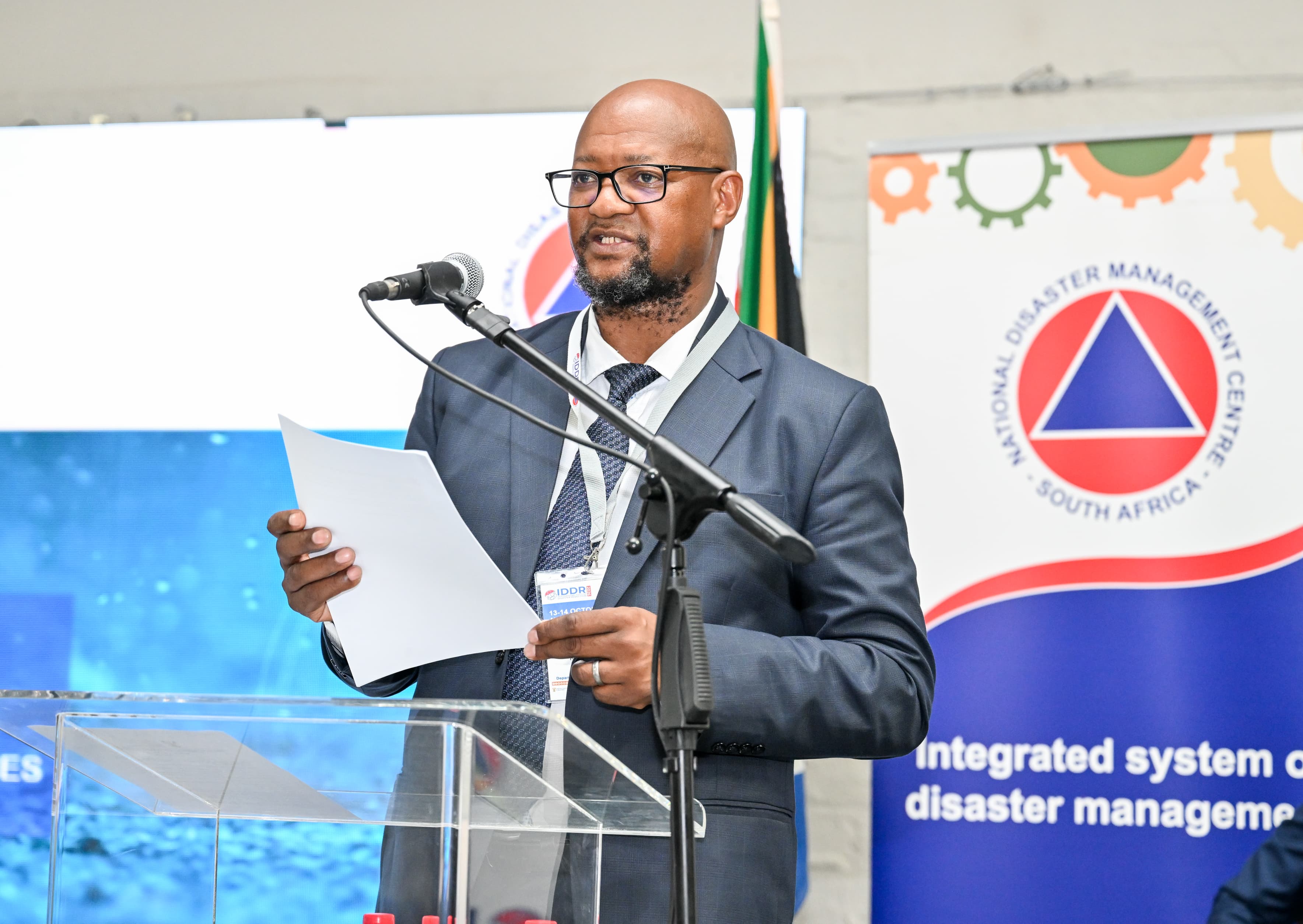
Day 1: International Day for Disaster Risk Reduction | 13 October 2026 | Anew Hotel, Mbombela
By Communications on October 13, 2026
DG TSHANGANA CALLS FOR A SHIFT FROM DISASTER RESPONSE TO PREVENTION
Speaking at the Day 1 commemoration of the 2026 International Day for Disaster Risk Reduction (IDDRR), Director-General of Cooperative Governance, Mr Mbulelo Tshangana, called for greater investment in disaster prevention, stressing that resilience must be built before disasters occur.
Under the theme, “Resilience Starts at Home: Integrating Proactive Disaster Risk Reduction and Prevention,” Tshangana said resilience begins when households and communities understand risks, participate in planning processes and take action to reduce vulnerabilities.
He emphasised the need to integrate disaster risk reduction into development planning, service delivery and infrastructure investment, while strengthening early warning systems, municipal capacity and community participation.
Tshangana further highlighted the importance of aligning climate action with disaster risk reduction and prioritising investment in prevention and preparedness.
“Let us move from knowing risk to managing risk, from warning to early action, and from response to prevention. Together, we can build communities that are safer, stronger and more resilient,” he said.
Speaking at the commemoration, Head of the National Disaster Management Centre (NDMC), Dr Elias Sithole, called for stronger efforts to build South Africa’s resilience to disasters, climate change and growing vulnerabilities.
Dr Sithole said resilience is the ability of communities, institutions and systems to anticipate risks, reduce vulnerabilities and recover in ways that support sustainable development.
He noted that climate change, urbanisation and ageing infrastructure continue to increase disaster risks, making local government central to disaster risk reduction, preparedness and recovery.
“Municipalities remain at the forefront of building resilient communities. Strengthening local capacity, early warning systems and investment in prevention remains critical to protecting lives, livelihoods and development gains,” he said.