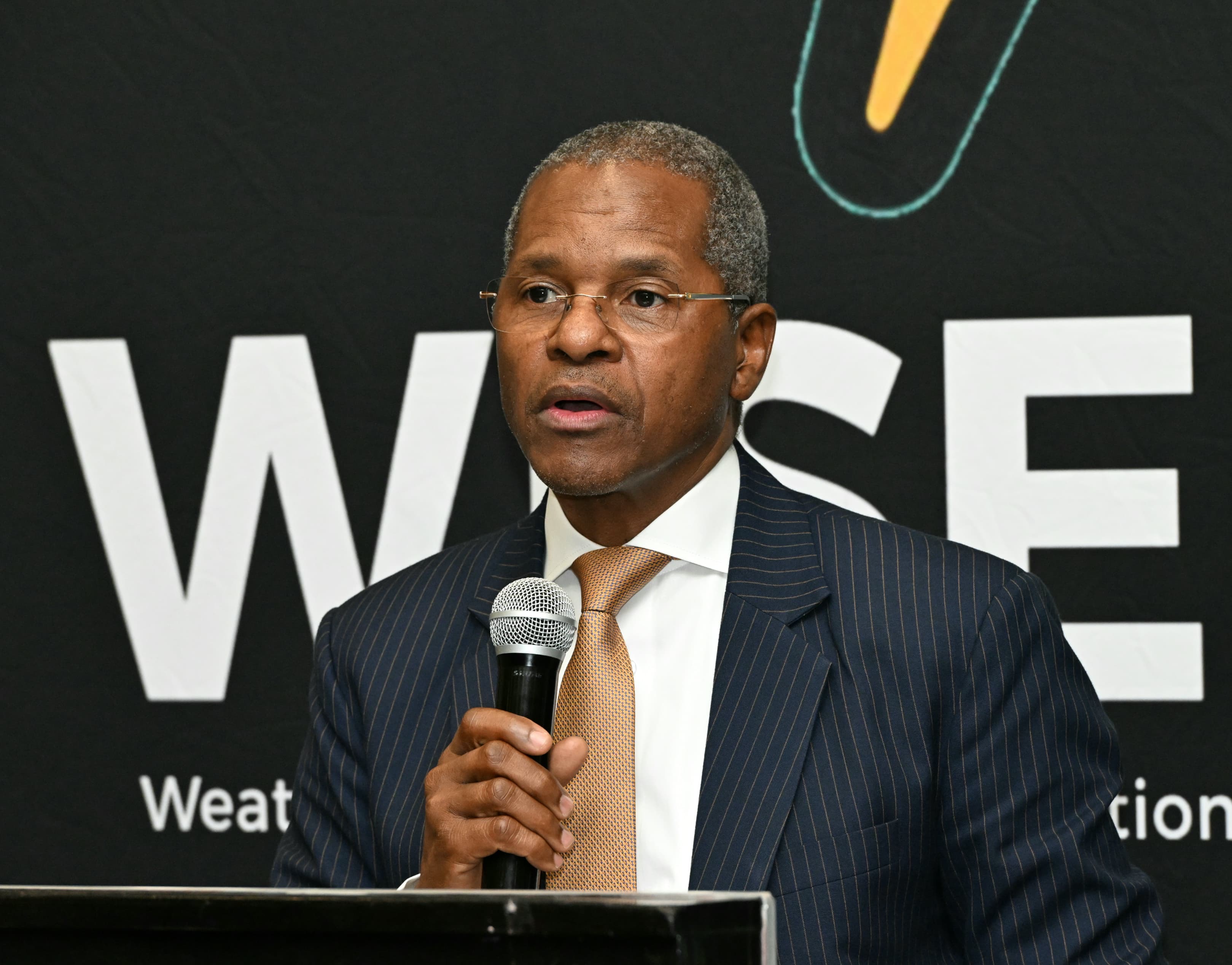
MINISTER HLABISA CALLS FOR STRONGER USE OF WEATHER AND CLIMATE INFORMATION TO PROTECT COMMUNITIES DURING HIS KEYNOTE ADDRESS TO THE NATIONAL WORKSHOP TO ADVANCE PEOPLE-CENTRED WEATHER FORECASTING ;
By Communications on July 28, 2026
The Minister of Cooperative Governance and Traditional Affairs (CoGTA), Mr Velenkosini Hlabisa delivered the keynote address at National Workshop to Advance People-Centred Weather Forecasting hosted jointly by the South African Weather Service (SAWS) and the National Disaster Management Centre (NDMC).
Minister Hlabisa emphasised the urgent need to strengthen the translation of weather and climate information into practical action that protects lives, livelihoods, and critical infrastructure from the growing threat of climate-related disasters.
Addressing a national workshop on impact-based forecasting and disaster risk reduction, Minister Hlabisa said the gathering marked the beginning of an important national conversation on how South Africa can better connect scientific knowledge with practical decision-making.
“This is not merely another technical workshop. It is the start of a vital process aimed at ensuring that weather and climate information leads to informed decisions and timely action that reduces vulnerability and strengthens resilience across society,” said Minister Hlabisa.
The Minister noted that South Africa continues to experience increasingly severe floods, storms, droughts, and other extreme weather events, with devastating consequences for communities, infrastructure, and local economies.
He stressed that while accurate weather information remains essential, information alone does not save lives. “Lives are saved when individuals, communities, and institutions understand weather warnings and act on them effectively and timeously,” he said.
Minister Hlabisa further highlighted that challenges relating to accountability, interpretation, and understanding of severe weather warnings, coupled with varying levels of operational capacity across disaster management structures, remain significant obstacles in protecting communities and reducing disaster risk.
The Minister welcomed the continued implementation of impact-based forecasting, introduced in 2020, describing it as a significant shift in South Africa’s approach to weather warnings. The system focuses not only on forecasting weather conditions but also on communicating their likely impact on people, infrastructure, and essential services, enabling better preparedness and response.
He called on all stakeholders across government, the scientific community, disaster management structures, and civil society to work together to strengthen early warning systems and ensure that weather and climate information results in meaningful action that safeguards communities and builds resilience.
The four-day workshop is reviewing the existing Impact-Based Forecasting (IBF) System, which was introduced in 2020 to shift weather forecasting beyond reporting the intensity of weather events towards highlighting their potential impacts on communities, infrastructure and livelihoods. While this approach marked a significant improvement in weather communication, recent severe weather events have highlighted ongoing challenges in ensuring that warnings lead to timely and effective action that protects lives and property.
Key obstacles include the accessibility and interpretation of weather warnings, varying levels of public understanding, and operational capacity constraints across disaster management structures. These challenges underscore the need for a forecasting system that not only informs communities of impending hazards but also provides clear guidance on the actions required to reduce risks and enhance preparedness.
In response, SAWS and the NDMC are leading a collaborative process to co-design an Action-Based Forecasting (ABF) System. The proposed model seeks to translate weather forecasts and warnings into practical, easy-to-understand actions that vulnerable communities, disaster management practitioners and other stakeholders can implement before hazardous weather conditions occur.
The initiative aligns with the ActionFirst™️ in Africa programme, which advocates for a shift from producing forecasts to ensuring that weather information is actionable, co-created with end users and integrated into decision-making processes. The approach places communities at the centre of forecasting systems, enabling early and effective responses to weather-related risks.